Analysis Readiness: Six Items Academic Teams Need for IRB/GDPR
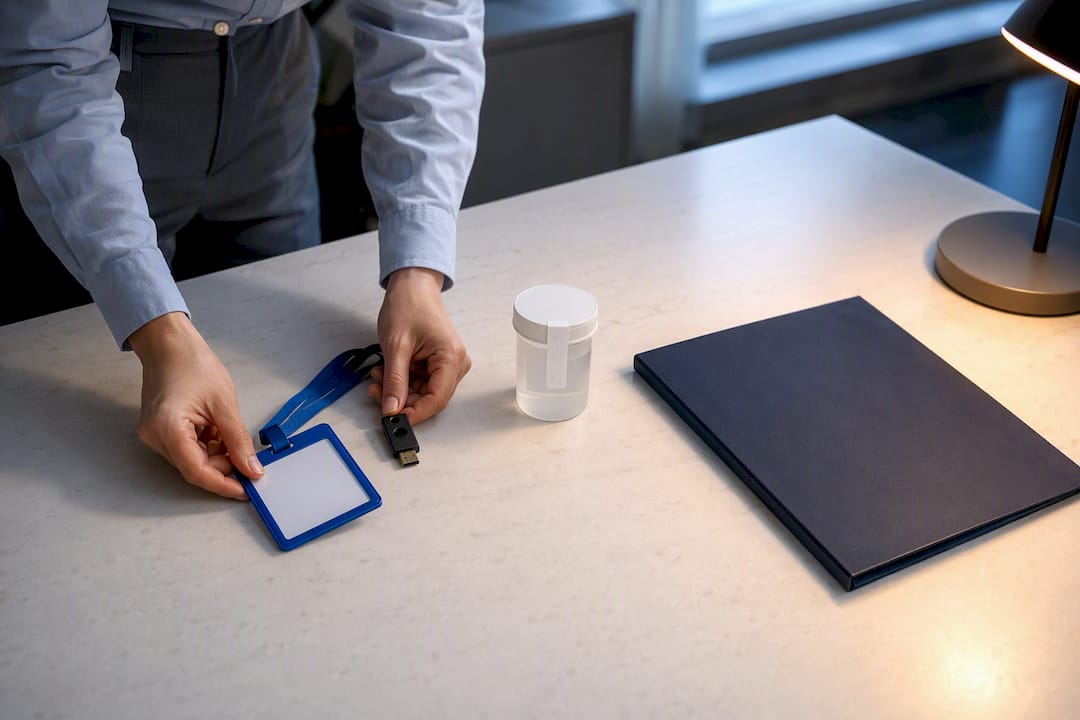
A dataset is analysis ready only when six things exist and can be produced on demand: an IRB determination with a protocol number, a timestamped pre-registration or SAP, a documented GDPR lawful basis (with a DPIA where required), a data management plan with a data dictionary and access tier, reproducible code with a full environment record, and a signed-off QC and deviations log. If any one of these is missing, the analysis is not ready, no matter how clean the dataset looks.
TL;DR:
- Each artifact, including IRB approval, pre-registration, data governance, analysis plan, reproducibility package, and verification, must be documented and filed before analysis begins to prevent readiness gaps.
- IRB review should be completed with approval and review level confirmed before data collection, typically taking between 2 to 8 weeks, and GDPR lawful basis plus DPO consultation must be recorded in the data management plan.
- The data management plan needs detailed data inventory, access tiers, storage procedures, and how de-identified data’s shareability is determined, with controlled access applied where necessary.
- The analysis plan must be locked with prespecified outcomes and methods before code execution, including clear registration timestamping, power justifications, and a deviations table for any changes.
- Reproducibility requires capturing environment details, using master run scripts, generating checksum manifests, and documenting outputs to ensure analyses can be rerun exactly and verified independently.
Table of Contents
- The Analysis Readiness Checklist, Grouped by Function
- What Do IRB and GDPR Reviewers Actually Expect?
- What Belongs in the Data Management Plan Before Analysis Starts?
- Locking the Analysis Plan Before Anyone Touches the Data
- Building a Reproducibility Package That Survives a Rerun
- How Do You Verify an Analysis Before It Ships?
- Mapping the Timeline Against IRB and Registration Gates
- What Actually Trips Teams Up
- How Plotstudio Fits This Checklist
- Sources
- FAQ
The Analysis Readiness Checklist, Grouped by Function
Most readiness failures aren’t technical. They’re organizational: nobody wrote down who owns which artifact, or when it needs to exist by. Below is a working checklist organized by function, with the artifact, owner, and README entry each item should produce.
1. Ethics and consent
- IRB determination on file (Exempt, Expedited, or Full Board), with protocol number and approval date. Owner: PI. README entry: “Protocol #___, approved ___, review level ___.”
- Consent language reviewed against planned sharing scope. Owner: PI. README entry: sharing restrictions summarized in plain terms.
2. Pre-registration
- PAP or SAP registered before unblinding, with registry ID and timestamp. Owner: PI/statistician. README entry: registry link and version hash.
- Saved PDF snapshot of the registered plan, stored with the project files, not just linked externally.
3. Data governance
- Lawful basis for special-category data documented; DPIA completed if required. Owner: PI with data protection officer (DPO). README entry: lawful basis citation and DPIA reference number.
- Data dictionary and access tier assigned (open, registered, or controlled). Owner: data steward.
4. Analysis plan
- Primary outcomes, estimators, and multiple-testing plan locked before code runs. Owner: statistician.
- Power/MDE justification with assumptions for intra-cluster correlation (ICC) and attrition.
5. Reproducibility
- Environment record (lockfile, seed, dependency versions) saved alongside code. Owner: analyst.
- Manifest file listing every output with a checksum.
6. Verification
- Second reviewer sign-off logged, with date and reviewer initials. Owner: QA reviewer.
Before running a single model, confirm each of these six groups has at least one artifact filed. That single pass catches the majority of readiness gaps teams discover only after a reviewer asks for them.
What Do IRB and GDPR Reviewers Actually Expect?
IRB reviewers want to see the review level determined before data collection starts, not retrofitted afterward. Timelines for IRB review typically run 2 to 8 weeks, and that window needs to sit in your project schedule as a hard dependency, not a hopeful guess.
GDPR reviewers, meanwhile, care less about your statistics and more about your paper trail. For health or special-category data, you need an identified lawful basis, such as explicit consent or the scientific-research safeguard under GDPR, plus a documented decision on whether a Data Protection Impact Assessment (DPIA) and Article 30 processing records apply.
- Record IRB protocol number, review level, and approval date in the DMP header.
- Map exact consent wording to permissible sharing tiers; narrow consent means controlled access, not open deposit.
- Log DPO consultation date and outcome, even when the conclusion is “no DPIA required.”
Pro Tip: Consent language usually constrains sharing more than technical de-identification does. A perfectly anonymized file can still be legally undepositable if the consent form never mentioned “public repository.”
What Belongs in the Data Management Plan Before Analysis Starts?
A data management plan (DMP) that exists only as a funder-mandated PDF is not the same as one your team actually uses. Before analysis starts, the DMP needs a real data inventory: every file, its provenance, and a data dictionary defining each variable, its type, and its permitted values.
- Assign and justify an access tier (open, registered, or controlled) for every data product, since participant-level data typically requires tiered access decisions rather than a single blanket policy.
- Draft data use agreements (DUAs) for any controlled-access tier before a single external collaborator requests the file.
- Document storage location, backup cadence, encryption method, and the list of authorized users.
- Write a README that explains, in plain language, how a future user requests access and what they’ll receive.
Even de-identified data can still require controlled release if consent language or the sharing repository’s own rules limit reuse. Treat de-identification and shareability as two separate questions, answered separately, in the DMP.
Locking the Analysis Plan Before Anyone Touches the Data
The single highest-leverage moment in the entire checklist is the minute before code runs. Once an analyst has seen outcome data, every subsequent decision about model specification carries a shadow of hindsight bias, which is exactly what a pre-analysis plan (PAP) exists to prevent.
- Timestamp the registration before any intervention or unblinding event, and record the registry name, ID, and date. Registry checklists call for explicit field-by-field prespecification to prevent post hoc searching.
- Prespecify primary outcomes, exact estimators, covariates, clustering structure, and missing-data handling rules.
- State the multiple-testing family up front rather than deciding which corrections to apply after seeing results.
- Justify power and minimum detectable effect (MDE) with explicit ICC, take-up rate, and attrition assumptions.
- Build a deviations table now, with empty rows ready, so any later departure from the plan gets logged instead of quietly absorbed.
Pro Tip: Keep the PAP to one to three primary outcomes. Over-prespecifying every possible secondary outcome adds multiplicity burden without adding credibility.
Building a Reproducibility Package That Survives a Rerun
Code that only runs on the original analyst’s laptop is not reproducible, no matter how well commented it is. A major barrier to reproducibility is missing environment and dependency documentation, so recording the exact computational context is as important as the code itself.
- Capture a full environment record:
session_infooutput, a lockfile, or a Dockerfile pinning every dependency version and the random seed used. - Write a single master run script that executes the full pipeline start to finish, plus per-script logs showing what ran and when.
- Ship annotated notebooks that explain reasoning alongside code, not just outputs.
- Generate a
MANIFEST-SHA256.txtlisting every output file with a checksum, so a reviewer can confirm nothing changed silently.
| Artifact | File name pattern | Purpose |
|---|---|---|
| Environment record | environment.lock / Dockerfile |
Pins dependency versions and seeds |
| Master script | run_all.R or run_all.py |
Executes full pipeline in one command |
| Manifest | MANIFEST-SHA256.txt |
Checksums every output for verification |
| README | README.md |
Explains access procedures and file structure |
When raw data cannot leave a secure environment, replication-package templates recommend shipping synthetic example data plus execution instructions, or a trusted-computing certificate where the hosting institution provides one. Our own walkthrough of a reproducible workflow covers how to structure this without exposing a single row of real data.
How Do You Verify an Analysis Before It Ships?
Verification is the step teams skip under deadline pressure, and it’s the step reviewers ask about first. A second analyst or statistician should review the code and sign off independently of whoever ran it originally.
- Run pre-specified QC checks: outlier flags, subgroup re-runs, and sanity checks against known population parameters.
- Conduct an output disclosure review before anything leaves a secure computing environment, confirming no cell sizes or combinations could re-identify a participant.
- Log every approval, with reviewer name, date, and what was checked, not just a final “approved” stamp.
- Fill the deviations table with any departure from the registered plan, however small, and route it into the methods appendix or supplement.
Curation practices from secure data environments increasingly call for mandatory code sharing during the curation step itself, which gives a second reviewer something concrete to check against.
Pro Tip: A QC pass that only checks “does the code run” isn’t verification. It has to confirm the code produces the registered analysis, not just any analysis.
Mapping the Timeline Against IRB and Registration Gates
Every readiness item above has to land in a schedule, or it becomes a bottleneck nobody planned for. Treat these as hard gates, not soft suggestions:
- Submit the IRB application at the earliest defensible point, with a 2 to 8 week buffer built into the project timeline.
- Finalize the SAP and register it before any unblinding or intervention rollout.
- Confirm the DMP and computational environment are ready before anyone touches real data.
- Assign roles explicitly: PI owns the protocol and IRB relationship, the data steward owns the DMP, the statistician owns the SAP, the analyst owns the code, and a QA reviewer owns verification sign-off.
A one-page role map, pinned to the project’s README, prevents the common failure where everyone assumes someone else registered the plan.
What Actually Trips Teams Up
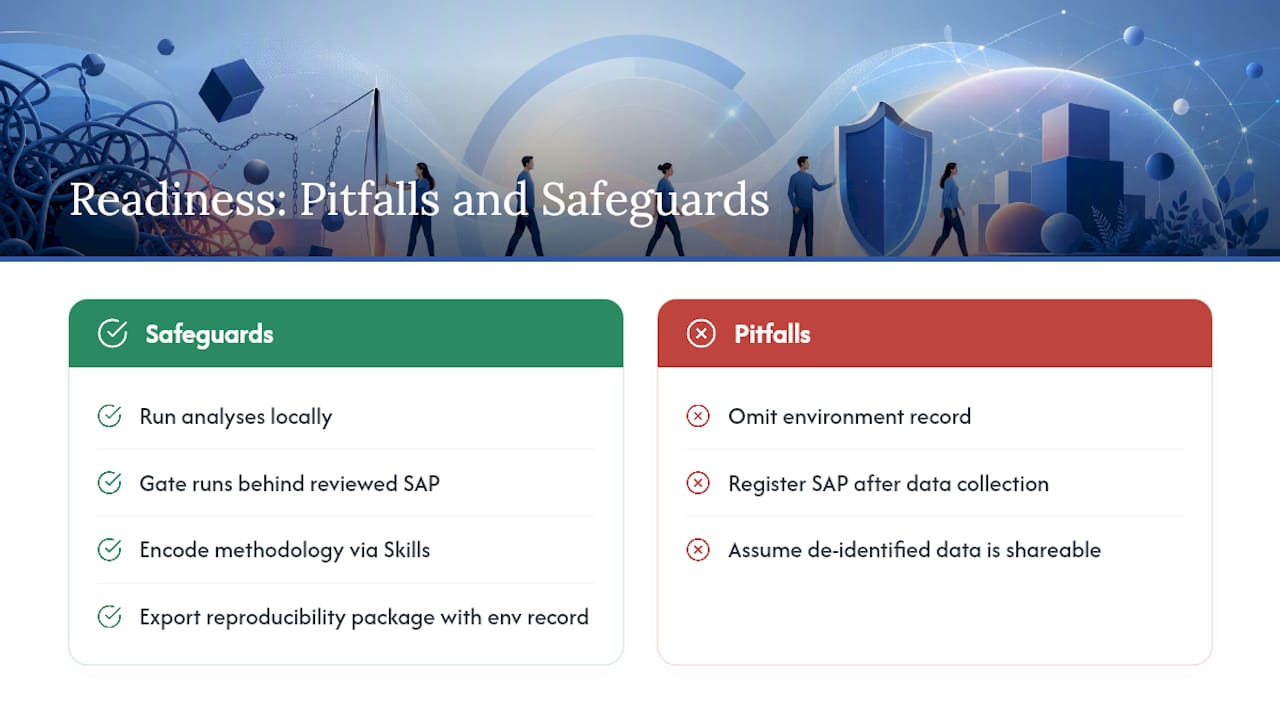
The pitfalls that sink readiness reviews are rarely dramatic. It’s the missing environment record nobody noticed until a reviewer asked for it, the SAP registered two weeks after data collection quietly started, or the assumption that de-identified data is automatically shareable when consent language never said so.
Plotstudio was built around exactly these failure points: analysis runs locally so IRB-governed or GDPR special-category data never leaves the researcher’s machine, every run is gated behind an analysis plan reviewed before code executes, and Skills let a lab encode its own discipline’s methodology once. Every analysis exports a full reproducibility package, annotated notebooks, environment record included, so the artifacts this checklist demands exist by default.
— Aymen
How Plotstudio Fits This Checklist
If you’ve read this far, you already know the gap isn’t willpower. It’s the hours lost rebuilding environment records, chasing down who approved what, and reconstructing a SAP timeline after the fact. Plotstudio closes that gap by making the checklist’s hardest items structural instead of manual.
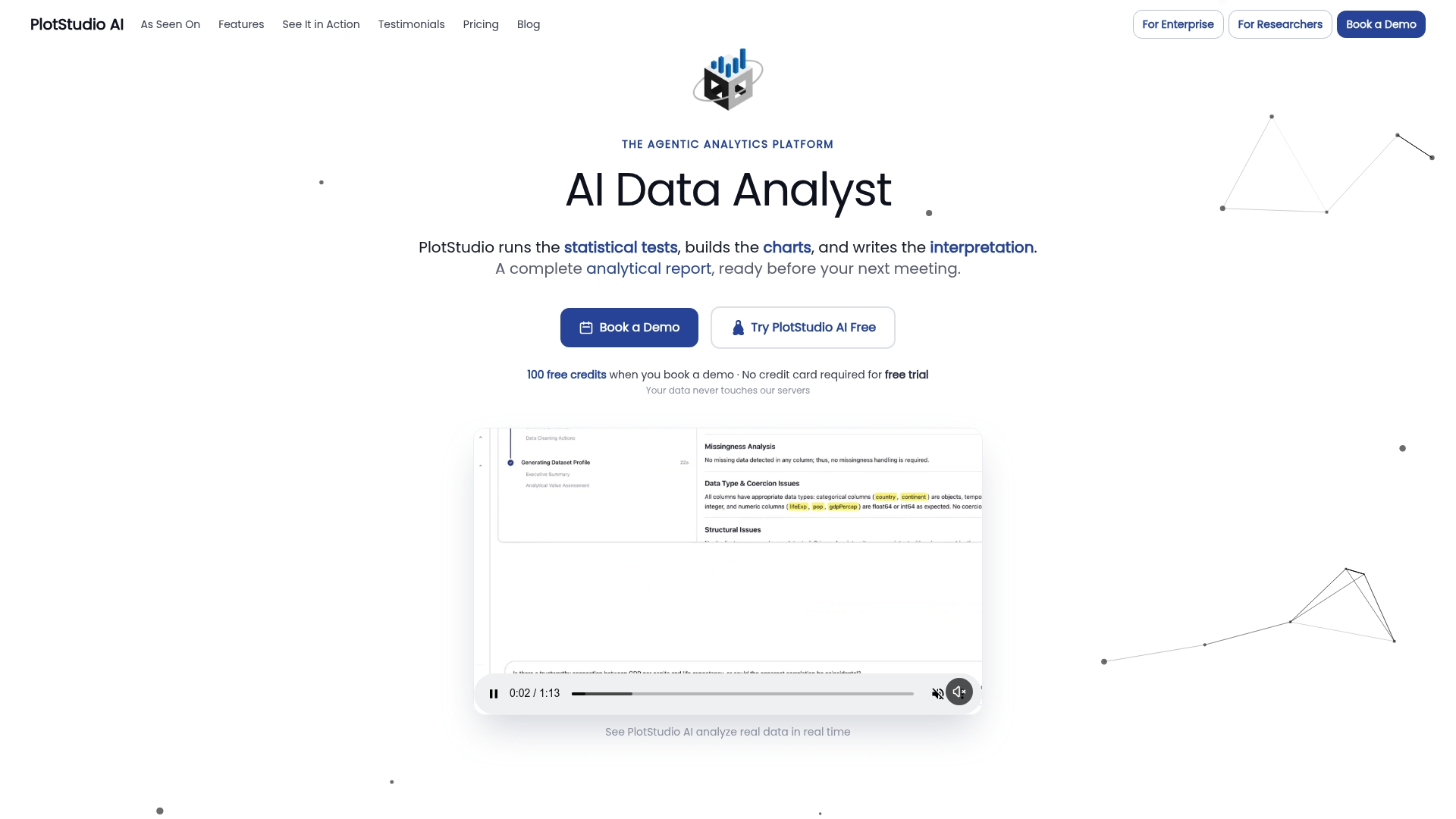
Analysis runs locally on your own machine, so IRB-governed and GDPR special-category patient data never touches a cloud server. Every analysis sits behind a plan you review and approve before a single line of code executes, methods, assumptions, and success criteria stated up front, functioning as both a pre-registration and an audit trail. Skills let your lab encode required steps, statistical thresholds, and reporting conventions once, so every subsequent analysis follows your field’s methodology automatically. Outputs export as annotated notebooks and PDF reports on permanent, searchable pages, giving a supervisor or reviewer exactly the reproducibility package this checklist calls for.
Academic teams can start with the Bring Your Own Key academic plan, or check current plans and pricing to see which option fits your lab’s workflow.
Sources
- IRB review process — University of Michigan HRPP
- Research support: GDPR and health data — Yale (guidance)
- Managing participant-level research data — CASRAI
- Barriers to reproducibility: environment and documentation — PMC (open access)
FAQ
What Is an Analysis Readiness Checklist in Academic Research?
It’s a documented list confirming six things exist before analysis begins: IRB approval, a registered analysis plan, a GDPR lawful basis, a data management plan with access tiers, reproducible code with an environment record, and a signed QC log. Reviewers and journals increasingly expect proof of each, not just a verbal assurance.
How Long Does IRB Review Typically Take?
IRB review generally takes 2 to 8 weeks, depending on whether the study qualifies as Exempt, Expedited, or Full Board. Build that window into your project timeline before scheduling data collection.
Does De-Identifying Data Mean It Can Be Shared Openly?
Not necessarily. Consent language and repository rules can still require controlled access even after data has been de-identified, so the DMP needs to treat de-identification and shareability as separate decisions.
Can Plotstudio Help Meet These Readiness Requirements?
Yes. Plotstudio runs analysis locally so sensitive data never leaves your device, gates every run behind a reviewed analysis plan, and exports full reproducibility packages with environment records and annotated notebooks. Pricing starts at $39.99 per month for Bring Your Own Key, with an academic annual option available.
What Should a Deviations Table Include?
It should log every departure from the registered SAP or PAP, including what changed, when, who approved it, and why. This table typically goes into the methods appendix or supplementary materials so reviewers can trace exactly where the executed analysis diverged from the pre-registered plan.